The Rise of AI in Digital Marketing
In recent years, artificial intelligence (AI) has revolutionised numerous industries, and digital marketing is no exception. As businesses strive to connect with their audiences in more meaningful ways, AI offers tools and strategies that enhance personalisation, efficiency, and effectiveness.
Understanding AI in Digital Marketing
AI refers to the simulation of human intelligence processes by machines, particularly computer systems. In the realm of digital marketing, AI can analyse data, predict trends, and automate tasks. This allows marketers to make informed decisions and engage with customers on a deeper level.
Key Benefits of AI in Digital Marketing
- Personalisation: AI enables brands to create highly personalised experiences for their customers. By analysing user behaviour and preferences, AI can deliver tailored content that resonates with individual consumers.
- Efficiency: Automating repetitive tasks such as email campaigns and social media postings allows marketers to focus on strategy and creativity. AI tools can manage these functions efficiently without sacrificing quality.
- Data Analysis: With vast amounts of data available, AI helps marketers sift through information quickly to identify patterns and insights. This leads to better targeting and more effective campaigns.
AI Tools Transforming Digital Marketing
A variety of AI-powered tools are now integral to digital marketing strategies:
- Chatbots: These provide instant customer service by responding to queries in real-time, improving customer satisfaction while freeing up human resources for more complex issues.
- Predictive Analytics: By analysing past data trends, predictive analytics help forecast future consumer behaviours, enabling proactive marketing strategies.
- Content Generation: AI can assist in creating content by generating ideas or even writing articles based on specific keywords or topics.
The Future of AI in Digital Marketing
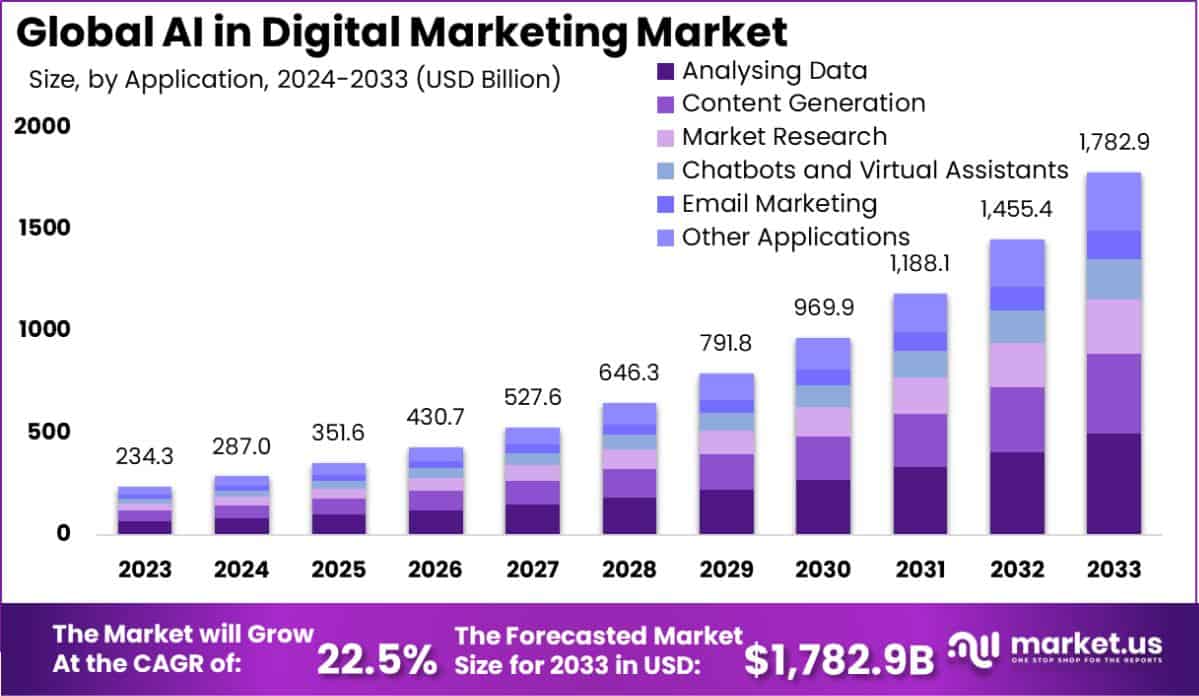
The integration of AI into digital marketing is only set to grow. As technology advances, so too will the capabilities of AI systems. Marketers must stay abreast of these developments to leverage new opportunities effectively. The future promises even more personalised interactions and smarter decision-making processes driven by sophisticated algorithms.
The rise of AI is reshaping the landscape of digital marketing. Businesses that embrace these technologies will not only improve their operations but also build stronger connections with their customers. As we move forward into an increasingly digital age, the role of AI will undoubtedly become even more pivotal.
Exploring AI in Digital Marketing: Addressing Common Questions and Concerns
- Can AI replace digital marketers?
- How is AI being used in online marketing?
- How will AI affect digital marketing?
- Can you make money with AI marketing?
- What is AI marketing examples?
- Will AI take over digital marketing?
- How AI is transforming digital marketing?
- How AI will impact digital marketing?
Can AI replace digital marketers?
While AI has significantly transformed the landscape of digital marketing by automating tasks, analysing data, and enhancing personalisation, it is unlikely to completely replace digital marketers. AI excels at processing large volumes of data and identifying patterns that might not be immediately apparent to humans. However, the creativity, strategic thinking, and nuanced understanding of human emotions and cultural contexts that marketers bring to the table are irreplaceable. Digital marketing is not just about numbers; it’s about crafting compelling narratives that resonate with audiences. AI can certainly augment a marketer’s capabilities by providing valuable insights and handling repetitive tasks, but the human touch remains essential for developing innovative strategies and building genuine connections with consumers. Therefore, rather than viewing AI as a replacement, it should be seen as a powerful tool that complements and enhances the skills of digital marketers.
How is AI being used in online marketing?
AI is transforming online marketing by enabling businesses to deliver more personalised and efficient experiences to their customers. Through the use of machine learning algorithms, AI analyses vast amounts of data to identify patterns and predict consumer behaviour. This allows marketers to tailor content and offers to individual preferences, enhancing engagement and conversion rates. AI-powered chatbots provide instant customer service, addressing queries in real-time and improving user satisfaction. Additionally, AI tools automate repetitive tasks such as email marketing campaigns and social media postings, freeing up time for marketers to focus on strategy and creativity. Predictive analytics driven by AI also help in forecasting trends, allowing businesses to make informed decisions about future marketing strategies. Overall, AI is making online marketing more targeted, efficient, and effective.
How will AI affect digital marketing?
AI is set to profoundly impact digital marketing by enhancing personalisation, improving efficiency, and enabling data-driven decision-making. Through advanced algorithms and machine learning, AI can analyse vast amounts of data to identify consumer patterns and preferences, allowing marketers to tailor content and campaigns more precisely than ever before. This leads to highly targeted marketing efforts that resonate with individual consumers. Additionally, AI automates routine tasks such as email marketing and social media management, freeing up time for marketers to focus on strategy and creativity. By providing predictive analytics, AI also helps businesses anticipate market trends and consumer behaviour, enabling them to stay ahead of the competition. Overall, AI is transforming digital marketing into a more efficient, effective, and personalised endeavour.
Can you make money with AI marketing?
Yes, making money with AI marketing is not only possible but increasingly common as businesses leverage artificial intelligence to optimise their marketing strategies. AI tools can analyse vast amounts of data to identify trends and consumer behaviours, enabling companies to target their audiences more effectively. By automating repetitive tasks and personalising customer interactions, AI reduces operational costs and increases efficiency, ultimately leading to higher conversion rates and improved return on investment. Additionally, predictive analytics powered by AI can forecast future trends, allowing businesses to stay ahead of the competition and make informed decisions that drive revenue growth. As AI technology continues to evolve, its potential for generating profit in digital marketing will only expand.
What is AI marketing examples?
AI marketing encompasses a variety of tools and techniques that leverage artificial intelligence to enhance marketing strategies. Examples of AI marketing include chatbots, which provide real-time customer support and engagement on websites, and predictive analytics, which analyse historical data to forecast future consumer behaviour and trends. Another example is programmatic advertising, where AI algorithms automatically buy ad space in real-time to target specific audiences more effectively. Additionally, AI-driven content creation tools can generate personalised email campaigns or social media posts tailored to individual preferences. These examples demonstrate how AI can optimise marketing efforts by improving efficiency, personalisation, and targeting accuracy.
Will AI take over digital marketing?
While AI is becoming an integral part of digital marketing, it is unlikely to completely take over the field. AI excels at automating repetitive tasks, analysing large data sets, and providing insights that can inform marketing strategies. However, the human element remains crucial in crafting creative campaigns, understanding nuanced customer emotions, and building authentic brand narratives. AI serves as a powerful tool that enhances the capabilities of marketers rather than replacing them. By combining AI’s analytical prowess with human creativity and intuition, businesses can achieve more effective and personalised marketing outcomes. Therefore, rather than taking over, AI is set to complement and elevate the role of digital marketers.
How AI is transforming digital marketing?
Artificial intelligence is transforming digital marketing by enhancing personalisation, automating routine tasks, and improving data analysis. AI technologies enable marketers to deliver tailored content and experiences by analysing consumer behaviour and preferences in real-time. This level of personalisation helps build stronger connections with audiences. Additionally, AI automates tasks such as email campaigns and social media management, allowing marketers to focus on strategic initiatives rather than repetitive chores. Furthermore, AI’s ability to process vast amounts of data quickly and accurately leads to more informed decision-making and better-targeted marketing strategies. Overall, AI is making digital marketing more efficient, effective, and customer-centric.
How AI will impact digital marketing?
AI is set to have a profound impact on digital marketing by transforming how businesses interact with their audiences and optimise their strategies. With the ability to analyse vast amounts of data quickly, AI enables marketers to gain deeper insights into consumer behaviour and preferences, allowing for more personalised and targeted campaigns. Automation of routine tasks such as content scheduling, customer service through chatbots, and email marketing frees up time for marketers to focus on strategy and creativity. Additionally, AI-driven predictive analytics can forecast trends and consumer needs, enabling more proactive marketing efforts. As AI technology continues to evolve, it will enhance decision-making processes, improve customer experiences, and ultimately drive better results for businesses in the digital landscape.