
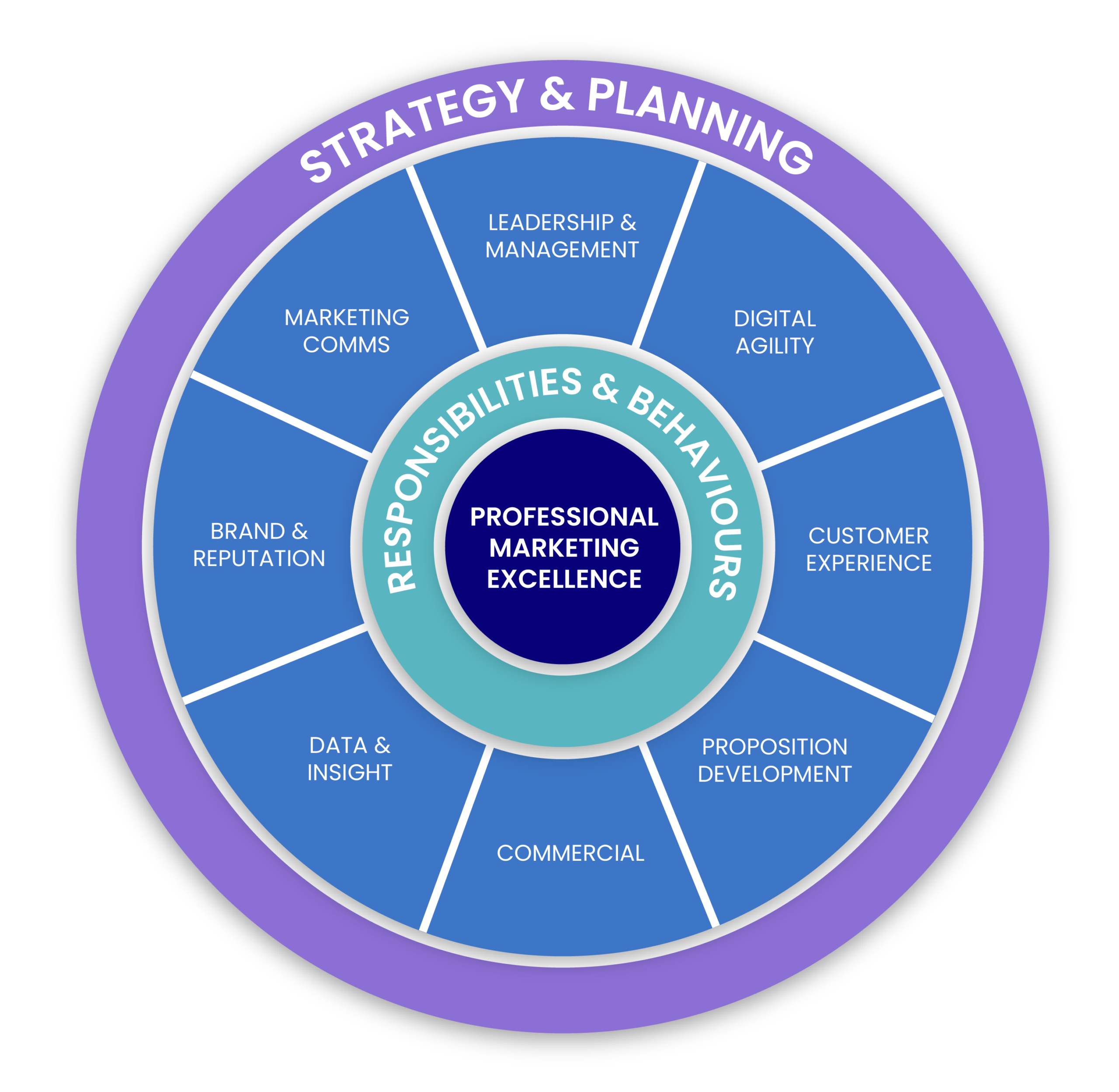
CIM and Digital Marketing: Building Skills for a Changing Industry
Digital marketing has become an essential part of how organisations attract customers, build relationships and grow. From search engines and social media to email, content and paid advertising, businesses need people who can bring digital channels together and use them effectively. The Chartered Institute of Marketing (CIM) offers professional learning and qualifications to help marketers develop the knowledge and skills to meet that challenge.
What is CIM?
The Chartered Institute of Marketing is a professional body for marketers. It provides training, qualifications, resources and opportunities for professional development. Its courses are designed for people at different stages of their careers, from those starting out to experienced marketers looking to strengthen their strategic capabilities.
CIM’s digital marketing learning covers the principles and practices behind online marketing. Depending on the course and level, this may include planning digital activity, understanding audiences, creating content, using data and evaluating campaign performance.
What does digital marketing involve?
Digital marketing is the promotion of products, services or organisations through online channels. It can include:
- Search engine optimisation (SEO): improving a website’s visibility in organic search results.
- Paid search and digital advertising: reaching audiences through paid placements across search engines, websites and platforms.
- Social media marketing: using social platforms to share content, engage audiences and support business goals.
- Content marketing: creating useful and relevant material to inform, attract or retain customers.
- Email marketing: communicating with subscribers and customers through targeted email campaigns.
- Analytics and measurement: assessing results to understand what is working and where activity could improve.
These channels are most effective when they support a clear strategy. That means understanding the audience, setting measurable objectives, choosing suitable channels and reviewing performance regularly.
Why study digital marketing with CIM?
A structured course can help learners build a broad understanding of digital marketing rather than focusing on a single platform or tactic. CIM study may be useful for people who want to:
- develop practical marketing knowledge;
- understand how digital channels contribute to wider business objectives;
- improve their ability to plan and evaluate campaigns;
- strengthen their professional credentials; or
- prepare for a move into a marketing role or a new area of responsibility.
Courses and qualification requirements can change, so prospective learners should check the current CIM website for details of available programmes, entry criteria, assessment methods and approved study options.
Skills that matter in digital marketing
Digital tools and platforms change frequently, but several underlying skills remain valuable. Marketers need to communicate clearly, think critically and understand how customer needs shape decisions. They also benefit from being comfortable with data, able to test ideas and willing to adapt when results or circumstances change.
Strategic thinking is especially important. A strong campaign is not simply a collection of posts or adverts; it has a defined purpose and fits the organisation’s wider marketing activity. Marketers should be able to explain what success looks like, choose appropriate measures and use the findings to make informed improvements.
Choosing the right learning path
The best route depends on your experience, career goals and preferred way of learning. Before enrolling, consider your current knowledge, the time you can commit and the areas you want to develop. Compare course content and assessment formats, and check whether the programme suits your role or intended career direction.
It is also worth considering how you will apply what you learn. Practical projects, workplace experience and regular reflection can help turn course concepts into useful skills. Digital marketing changes quickly, so ongoing learning is often just as important as gaining a qualification.
Conclusion
CIM digital marketing study can provide a structured way to develop marketing knowledge and build confidence across online channels. For aspiring and established marketers alike, the value comes from combining recognised learning with practical experience, curiosity and a commitment to measuring results. In a fast-moving industry, those foundations can help professionals make more informed decisions and create digital activity that supports real business objectives.
Understanding CIM Digital Marketing: Answers to 8 Common Questions
- Is CIM Level 6 a degree?
- Is CIM digital marketing worth it?
- Is CIM equivalent to a degree?
- What is CIM qualification?
- How much does a CIM course cost?
- What is CIM qualification equivalent to?
- What is CIM marketing qualification?
- Is CIM hard to pass?
Is CIM Level 6 a degree?
No. A CIM Level 6 qualification is not a university degree, but it is set at the same level as a bachelor’s degree on the UK qualifications framework. It provides advanced professional marketing knowledge and may support career progression, but it does not award a bachelor’s degree. Check the specific qualification and its recognition with CIM or the relevant education provider.
Is CIM digital marketing worth it?
CIM digital marketing qualifications can be worthwhile if you want structured learning, a recognised professional credential and a stronger understanding of how digital channels support wider marketing objectives. They may be particularly useful for people starting a marketing career or looking to build on practical experience. The value depends on your goals, budget and preferred way of learning, so compare the course content, costs and assessment requirements with other options before enrolling. A qualification can strengthen your knowledge, but practical experience and keeping up with changes in the digital industry remain important.
Is CIM equivalent to a degree?
CIM qualifications are professional marketing qualifications, not university degrees, so they are not generally considered equivalent to a bachelor’s degree. Some awards may be positioned at a comparable level within a qualifications framework, but that does not make them the same qualification or guarantee they will meet a university or employer’s degree requirements. Check the specific CIM award and the criteria of the organisation you are applying to.
What is CIM qualification?
A CIM qualification is a professional marketing qualification awarded by the Chartered Institute of Marketing (CIM). It helps learners develop practical knowledge and skills in areas such as marketing strategy, planning and digital marketing. Qualifications are available at different levels, so the right option depends on your experience and career goals; course content, entry requirements and assessments vary by programme.
How much does a CIM course cost?
The cost of a CIM course varies depending on the qualification, study centre and learning format. You may also need to budget for registration, assessment and membership fees, which may be charged separately, as well as VAT where applicable. Check the latest fees with CIM or an approved study centre, and ask whether payment plans or funding options are available.
What is CIM qualification equivalent to?
A CIM qualification’s equivalent depends on its level. In the UK, CIM qualifications are mapped to the Regulated Qualifications Framework (RQF): for example, Level 4 is broadly comparable in level to the first year of undergraduate study, while Level 6 is at bachelor’s-degree level and Level 7 is at postgraduate level. This describes the level of learning, not an automatic equivalence to a university degree or the same subject-specific credits. Check the details of the particular CIM qualification with CIM or the relevant awarding body.
What is CIM marketing qualification?
A CIM marketing qualification is a professional qualification awarded by the Chartered Institute of Marketing, designed to develop practical marketing knowledge and skills. CIM offers programmes at different levels, from introductory study to advanced qualifications, covering areas such as marketing strategy, customer insight, planning and digital marketing. The right option depends on your experience and career goals, so check CIM’s current course details for entry requirements, assessments and available study routes.
Is CIM hard to pass?
CIM can be challenging, but it is achievable with consistent preparation. The difficulty depends on your experience, the qualification and its assessment format, which may include assignments, case studies or exams. Make sure you understand the syllabus and assessment criteria, set aside regular study time and practise applying marketing concepts to real business situations. With a clear plan and steady effort, many learners find the workload manageable.