
Lead Generation in Digital Marketing: A Practical Guide
Lead generation is the process of attracting people who may be interested in your products or services and encouraging them to take a meaningful next step. In digital marketing, that step might be signing up for a newsletter, requesting a quote, booking a consultation or making an enquiry.
Effective lead generation is about more than collecting contact details. It means reaching the right people, offering something relevant and making it easy for them to continue their journey with your business.
Why lead generation matters
A steady flow of suitable leads can help a business build relationships with potential customers and create more opportunities for sales. It also gives marketing and sales teams a clearer picture of what audiences are looking for.
When lead generation is aligned with your business goals, it can help you:
- Reach people who are more likely to be interested in your offering
- Build an audience you can communicate with over time
- Understand which marketing channels are producing enquiries
- Improve the path from a first visit to a purchase or booking
Start with your audience and offer
Before choosing channels or creating a campaign, be clear about who you want to reach. Consider the problems your ideal customers are trying to solve, what information they need and what might prevent them from getting in touch.
Then develop an offer that gives them a useful reason to act. Depending on your business, this could be a practical guide, a product demonstration, a consultation, a sample, a quotation or a helpful email series. The offer should be relevant to your audience and clearly connected to what you provide.
Common digital lead generation channels
Search engine optimisation
Search engine optimisation (SEO) helps your website appear when people look for information, products or services related to your business. Useful pages that answer specific questions can attract visitors who are already researching a need. Clear calls to action can then guide them towards an enquiry or sign-up.
Paid search and social advertising
Paid advertising can put your offer in front of a defined audience more quickly than organic channels. Search ads can reach people actively looking for a solution, while social advertising can introduce your business to people based on relevant interests or characteristics. Test different messages and audiences, and monitor the quality of the leads as well as the number generated.
Content marketing
Articles, videos, case studies and guides can help potential customers understand a topic and assess their options. Strong content builds trust by being genuinely useful rather than simply promotional. You can include a relevant next step, such as downloading a guide or arranging a conversation.
Email marketing
Email can help you stay in touch with people who have chosen to hear from your business. Share useful advice, updates and relevant offers, and make it easy for recipients to manage their preferences or unsubscribe. Avoid sending messages to people who have not given the necessary permission.
Social media
Social platforms can support lead generation through useful posts, conversations, live events and targeted campaigns. Rather than treating every post as a sales pitch, focus on sharing information that helps your audience and gives them a natural reason to visit your website or contact your team.
Make your website work harder
Your website often plays a central role in turning interest into action. Make sure each important page explains what you offer, who it is for and what visitors can do next. Calls to action should be specific and easy to find—for example, “Request a quote” is clearer than “Click here”.
Keep forms as short as practical. Ask only for information you need at that stage, and explain how the information will be used. A clear privacy notice can help visitors make an informed choice.
Qualify and nurture leads
Not every lead is ready to buy. Some people may be comparing providers or gathering information, while others may be prepared to make a decision soon. A simple lead qualification process can help your team prioritise enquiries according to factors such as their needs, timing and fit with your services.
For people who are not ready to take the next step, consider a relevant follow-up journey. This might include helpful emails, a case study or an invitation to a webinar. Keep communications useful and respectful, and make sure they reflect the preferences people have given.
Measure what matters
Track performance against clear objectives. Useful measures may include:
- The number of leads generated by each channel
- The proportion of leads that meet your criteria
- The conversion rate from website visits to enquiries
- The cost of acquiring a lead
- The proportion of leads that become customers
- The time it takes for a lead to progress through your sales process
Lead volume alone can be misleading. A campaign that generates fewer but better-matched enquiries may be more valuable than one that produces a high number of unsuitable contacts. Review results regularly and use them to improve your targeting, offer and follow-up.
Respect privacy and build trust
Good lead generation depends on trust. Be clear about what someone is signing up for, collect only the data you need and handle it responsibly. For UK businesses, marketing activities must comply with applicable data protection and electronic marketing rules, including the UK GDPR and Privacy and Electronic Communications Regulations (PECR). Requirements can vary depending on the type of communication and audience, so check the relevant guidance for your circumstances.
Build a process, not just a campaign
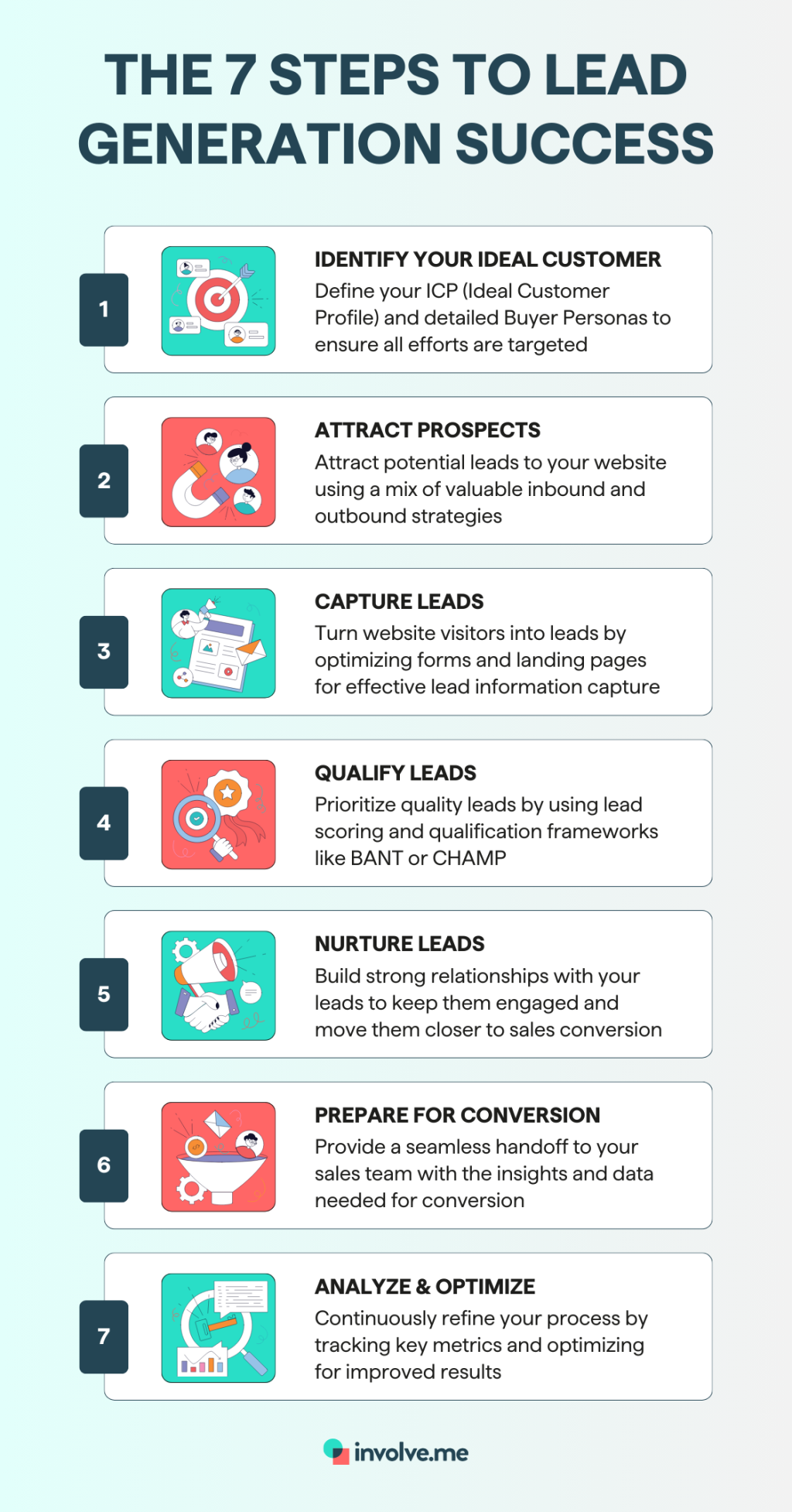
Successful lead generation is an ongoing process: understand your audience, create a useful offer, attract the right people, make it easy to respond and follow up appropriately. By measuring lead quality as well as quantity, your business can learn which activities are worth improving and where to invest next.
8 Key Benefits of Lead Generation in Digital Marketing
- Attracts potential customers who are interested in your products or services.
- Builds a steady pipeline of sales opportunities.
- Helps target specific audiences more effectively.
- Makes marketing performance easier to measure.
- Supports personalised communication with prospects.
- Can increase website enquiries and conversions.
- Helps businesses understand customer needs.
- Offers scalable ways to grow your audience.
Drawbacks of Lead Generation in Digital Marketing
- Can be costly to run.
- May attract low-quality leads.
- Results can take time.
- Requires ongoing testing and follow-up.
Attracts potential customers who are interested in your products or services.
Lead generation helps your business attract people who are already interested in the products or services you offer. By sharing relevant content, useful offers and targeted campaigns, you can connect with potential customers who are more likely to engage with your brand and take the next step, whether that is making an enquiry, requesting a quote or completing a purchase.
Builds a steady pipeline of sales opportunities.
Lead generation helps build a steady pipeline of sales opportunities by attracting and capturing the details of people interested in your products or services. Rather than relying solely on occasional enquiries, your business can nurture potential customers over time with relevant information and timely follow-ups. This gives your sales team a more consistent flow of prospects to engage with and can make future revenue easier to plan.
Helps target specific audiences more effectively.
Lead generation helps businesses target specific audiences more effectively by focusing marketing on people who are more likely to need or value their products and services. Using factors such as interests, online behaviour and previous interactions, businesses can tailor their messages and offers to suit different groups. This makes campaigns more relevant, helps use marketing budgets efficiently and can attract higher-quality enquiries.
Makes marketing performance easier to measure.
Lead generation makes marketing performance easier to measure by linking campaigns to clear, trackable actions, such as form submissions, calls or consultation bookings. By monitoring how many leads each channel generates, how much they cost and how many become customers, businesses can see what is working and where to invest their budget. This makes it easier to refine campaigns and focus on activity that delivers meaningful results.
Supports personalised communication with prospects.
Lead generation gives businesses valuable insight into what prospects are interested in, making it easier to tailor communication to their needs and stage in the buying journey. By sharing relevant advice, offers and follow-ups, rather than sending the same message to everyone, businesses can build trust, create a more engaging experience and help prospects make informed decisions.
Can increase website enquiries and conversions.
Lead generation can increase website enquiries and conversions by guiding interested visitors towards a clear next step, such as requesting a quote, booking a consultation or signing up for updates. With relevant offers, straightforward forms and well-placed calls to action, businesses can make it easier for potential customers to get in touch and turn their interest into measurable action.
Helps businesses understand customer needs.
Lead generation can help businesses gain a clearer understanding of customer needs by revealing what people are interested in and what challenges they are trying to solve. Enquiries, form responses and interactions with useful content can highlight common questions, preferences and concerns. By analysing these insights, businesses can refine their products, services and marketing messages to better meet their audience’s expectations.
Offers scalable ways to grow your audience.
Lead generation offers scalable ways to grow your audience by helping you reach more potential customers through channels such as search, social media, email and paid advertising. You can start with a focused campaign, measure how well it performs and expand the activities that bring in relevant leads. This makes it easier to grow your reach over time while adapting your approach to your budget, capacity and business goals.
Can be costly to run.
Lead generation can be costly to run, particularly when it involves paid advertising, specialist tools, content creation or dedicated staff time. Campaigns may also need ongoing testing and refinement before they produce a reliable return, and not every enquiry will become a customer. Setting a clear budget, tracking the cost and quality of leads, and reviewing performance regularly can help businesses focus their investment on the activities that deliver the greatest value.
May attract low-quality leads.
Lead generation can attract low-quality leads if a campaign reaches too broad an audience or its offer appeals to people who are unlikely to become customers. This can leave sales teams spending time on enquiries that are a poor fit, have little genuine interest or are not ready to buy. To reduce this, businesses should target carefully, set clear expectations in their advertising and assess lead quality—not just the number of contacts collected.
Results can take time.
One drawback of lead generation in digital marketing is that results can take time. Building awareness, earning trust and attracting the right prospects rarely happen overnight, particularly with approaches such as SEO and content marketing. Even paid campaigns may need time to gather data and be refined before they deliver consistent, high-quality leads. Businesses should set realistic expectations, monitor progress and allow enough time for their strategy to develop.
Requires ongoing testing and follow-up.
Lead generation requires ongoing testing and follow-up to deliver consistent results. Campaigns, audiences and messages may perform differently over time, so businesses need to regularly review their data and refine what they do. Leads also need timely, relevant communication; without it, potential customers may lose interest or choose a competitor. This takes continued time and resources, rather than being a one-off task.