
google digital marketing garage

Google Digital Marketing Garage: A Guide to Free Online Training

Google Digital Marketing Garage: A Guide to Google’s Free Online Training

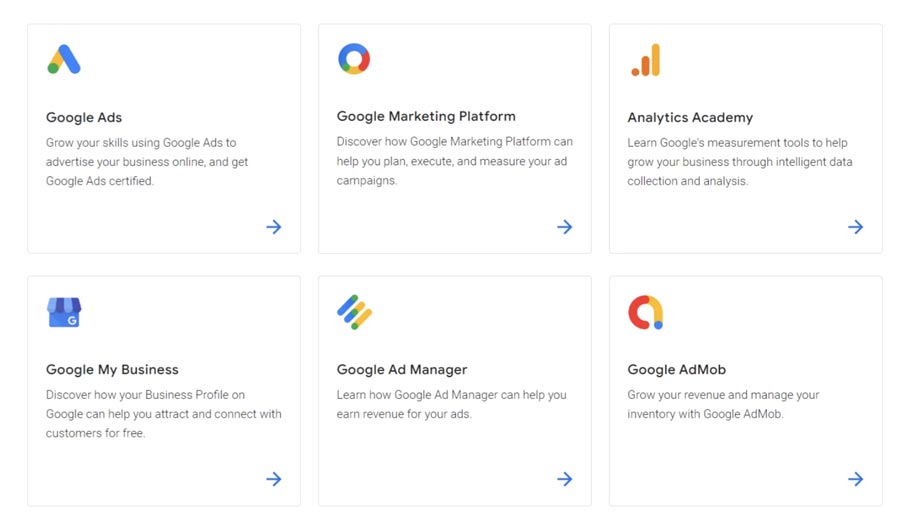
Google Digital Garage has helped people and businesses build their digital skills through free online training. Its courses cover topics such as digital marketing, online business and career development, making the platform a useful starting point for anyone looking to improve their knowledge of the digital world.

Course names, content and availability can change over time, so check Google’s official learning platforms for the latest information before signing up.

What is Google Digital Garage?

Google Digital Garage is the name commonly associated with Google’s digital-skills training. It has offered online courses designed for beginners as well as people looking to develop existing skills. Lessons typically combine written guidance, videos and practical activities, allowing learners to study at their own pace.

Digital marketing has been a key area of interest. Training in this field can introduce learners to the main ways organisations attract and engage customers online, from search engines and social media to websites and email.

What can you learn?

Depending on the courses available, subjects may include:

  • Search engine optimisation (SEO): How to improve a website’s visibility in organic search results.
  • Search advertising: The basics of paid search campaigns and reaching people who are looking for particular products or services.
  • Social media marketing: How businesses can use social platforms to share content and connect with audiences.
  • Content marketing: Planning useful, relevant content that supports a business’s goals.
  • Email marketing: The fundamentals of communicating with customers by email.
  • Analytics: Understanding website and campaign data to assess performance and inform decisions.
  • Online business strategy: Setting goals, identifying audiences and choosing suitable digital channels.

Courses may also cover wider digital skills, such as using online tools, presenting a business on the web or preparing for work in a digital role.

Who is it for?

Google’s digital marketing training can be useful for small-business owners, freelancers, students, jobseekers and people considering a career change. It may also suit marketing professionals who want to refresh their understanding of core concepts or explore a new area.

Because introductory courses are generally designed to be accessible, previous marketing experience may not be necessary. However, the best results come from applying what you learn to a real project, such as a business website, a campaign idea or a portfolio exercise.

Are the courses free, and do they provide a certificate?

Google has offered free training through its digital-skills initiatives, but course access and certificate arrangements can vary. Some programmes may provide a certificate after completing the required lessons or assessments; others may not. Check the course details on Google’s official site to confirm the cost, eligibility requirements and whether a certificate is included.

A certificate can show that you have completed a course, but it is not a substitute for practical experience. Employers and clients may also want to see examples of your work and how you have used your skills to solve a problem.

How to get the most from a digital marketing course

  1. Set a clear goal. Decide whether you want to learn the basics, promote a business or prepare for a particular role.
  2. Study actively. Take notes, complete the activities and look up unfamiliar terms.
  3. Practise on a project. Apply each topic to a website, campaign or sample business idea.
  4. Review the results. Use suitable data to see what is working and where improvements are needed.
  5. Keep learning. Digital platforms and marketing practices change, so treat an introductory course as a foundation rather than a final qualification.

Is Google Digital Garage worth exploring?

For anyone seeking an accessible introduction to online marketing, Google Digital Garage and Google’s related learning resources can be a useful place to begin. They can help learners understand key terms, channels and techniques without needing to commit to a lengthy programme at the outset.

The most valuable approach is to combine structured learning with hands-on practice. Explore the current courses through Google’s official learning pages, choose a subject that matches your goals and put the ideas to work on a project of your own.


Exploring Google Digital Marketing Garage: Answers to 7 Common Questions

  1. Does Google offer free training?
  2. Is Google Digital Garage actually free?
  3. What does Google digital garage do?
  4. Does Google Digital Garage give you a degree?
  5. What is Google Digital Garage used for?
  6. Is a Google Digital Garage certificate worth doing?
  7. Is Google Digital Marketing Course worth it?

Does Google offer free training?

Yes, Google offers a range of free online training through its learning platforms, including courses on digital marketing and other digital skills. Course content and availability can change, so check Google’s official training pages for current options and whether a particular course includes a certificate.

Is Google Digital Garage actually free?

Yes, Google Digital Garage courses have generally been free to access, including many introductory digital marketing lessons. However, course availability and certificate options can change, and not every Google training programme is necessarily free. Check the course details on Google’s official learning site before enrolling to confirm any costs and whether a certificate is included.

What does Google digital garage do?

Google Digital Garage provides online training to help people develop digital skills, including digital marketing, search engine optimisation and online business. Its courses are designed for learners at different experience levels and can be studied at your own pace. Course content, availability and any certificates may change, so check Google’s official learning pages for the latest details.

Does Google Digital Garage give you a degree?

No, Google Digital Garage does not award a university degree. It offers online learning resources and, for some courses, a certificate of completion. These can help you develop digital marketing skills and demonstrate your learning, but they are not equivalent to a degree or formal academic qualification. Check the details of the specific course to confirm whether a certificate is available.

What is Google Digital Garage used for?

Google Digital Garage is used to help people develop practical digital skills through online training. Its courses have covered topics such as digital marketing, search engine optimisation, social media, online advertising and analytics, making them useful for beginners, business owners and anyone looking to strengthen their digital knowledge. Course content and availability can change, so check Google’s official learning pages for the latest options.

Is a Google Digital Garage certificate worth doing?

A Google Digital Garage certificate can be worth doing if you’re new to digital marketing and want a structured introduction to the basics. It can help demonstrate initiative and give you useful knowledge to apply to a business or personal project. However, a certificate alone is unlikely to secure a job or prove advanced expertise; practical experience, examples of your work and up-to-date skills are important too. Check the current course details, as certificate availability and requirements may change.

Is Google Digital Marketing Course worth it?

Yes, Google’s digital marketing course can be worth it if you’re new to the subject and want a structured introduction to key concepts and online tools. It can help you build foundational knowledge at little or no cost, although course content and certificates may vary. It’s not a substitute for hands-on experience or more specialised training, so you’ll get the most from it by applying what you learn to a real project and checking that the course matches your goals.
google digital marketing

Unlocking the Potential of Google in Digital Marketing

The Power of Google in Digital Marketing

The Power of Google in Digital Marketing

In the realm of digital marketing, Google stands as a towering presence, offering a plethora of tools and platforms that have revolutionised the way businesses connect with their audiences online. From search engine optimisation (SEO) to pay-per-click advertising and analytics, Google’s suite of digital marketing solutions empowers businesses to reach their target customers effectively.

Google Ads: Driving Targeted Traffic

Google Ads, formerly known as Google AdWords, is a powerful advertising platform that allows businesses to create targeted ads that appear on Google’s search results pages and across its vast network of partner websites. By leveraging Google Ads, businesses can reach potential customers at the exact moment they are searching for products or services related to their offerings.

Google Analytics: Understanding Audience Insights

Google Analytics provides invaluable insights into website traffic and user behaviour. By tracking key metrics such as page views, bounce rates, and conversion rates, businesses can gain a deeper understanding of their audience and tailor their digital marketing strategies for optimal results. With Google Analytics, data-driven decision-making becomes the norm.

Google My Business: Enhancing Local Visibility

For businesses looking to enhance their local presence, Google My Business is an indispensable tool. By creating a profile on this platform, businesses can manage their online presence across Google Search and Maps, making it easier for local customers to find and engage with them. With features like customer reviews and business updates, Google My Business helps businesses build trust and credibility within their local communities.

Conclusion

In conclusion, Google’s suite of digital marketing tools offers businesses unparalleled opportunities to connect with their target audiences in meaningful ways. By harnessing the power of platforms like Google Ads, Analytics, and My Business, businesses can drive targeted traffic, gain valuable insights into audience behaviour, and enhance their online visibility. As digital marketing continues to evolve, leveraging the capabilities of Google will remain crucial for staying ahead in today’s competitive online landscape.


Understanding Google Digital Marketing: Key FAQs for Effective Strategies

  1. What is Google Ads and how does it work?
  2. How can Google Analytics help in tracking digital marketing performance?
  3. What are the benefits of using Google My Business for local businesses?
  4. How do I create effective ads on Google Ads to reach my target audience?
  5. What are some best practices for SEO when it comes to Google’s search engine?
  6. Can Google’s digital marketing tools be integrated with other platforms for a comprehensive strategy?

What is Google Ads and how does it work?

Google Ads, formerly known as Google AdWords, is a powerful online advertising platform offered by Google. It allows businesses to create and display ads on Google’s search results pages and its network of partner websites. Google Ads operates on a pay-per-click (PPC) model, where advertisers bid on specific keywords relevant to their target audience. When users search for these keywords, the ads are displayed at the top or bottom of the search results page. Advertisers only pay when users click on their ads, making it a cost-effective way to reach potential customers actively searching for products or services. Additionally, Google Ads provides detailed analytics and performance metrics to help advertisers track the effectiveness of their campaigns and make data-driven decisions to optimise their advertising strategies.

How can Google Analytics help in tracking digital marketing performance?

Google Analytics plays a pivotal role in tracking digital marketing performance by providing businesses with valuable insights into the effectiveness of their online campaigns. Through Google Analytics, businesses can monitor key metrics such as website traffic, user engagement, conversion rates, and more. By analysing this data, businesses can gain a comprehensive understanding of how their digital marketing efforts are performing and identify areas for improvement. With the ability to track and measure the impact of various marketing strategies in real-time, Google Analytics empowers businesses to make informed decisions and optimise their digital marketing initiatives for greater success.

What are the benefits of using Google My Business for local businesses?

Utilising Google My Business offers a multitude of benefits for local businesses seeking to enhance their online presence and connect with potential customers in their vicinity. By creating a profile on Google My Business, businesses can improve their visibility on Google Search and Maps, making it easier for local consumers to discover and engage with them. The platform allows businesses to provide essential information such as contact details, opening hours, and customer reviews, fostering trust and credibility within the local community. Additionally, Google My Business enables businesses to post updates, promotions, and events, keeping customers informed and engaged. Overall, leveraging Google My Business is a valuable strategy for local businesses looking to increase their online visibility, attract more foot traffic, and build strong relationships with their target audience.

How do I create effective ads on Google Ads to reach my target audience?

Creating effective ads on Google Ads to reach your target audience requires a strategic approach that combines compelling ad copy, relevant keywords, and precise targeting. Start by understanding your target audience’s preferences, needs, and behaviours to craft ad messaging that resonates with them. Conduct keyword research to identify the terms your audience is searching for and incorporate these keywords into your ads. Utilise ad extensions to provide additional information and enhance the visibility of your ads. Regularly monitor and analyse the performance of your ads to make data-driven adjustments and optimisations for maximum impact. By continuously refining your ad strategy based on insights and feedback, you can create ads that effectively engage your target audience on Google Ads.

What are some best practices for SEO when it comes to Google’s search engine?

When it comes to optimising your website for Google’s search engine, there are several best practices for SEO that can help improve your visibility and rankings. Firstly, focusing on relevant keywords and incorporating them strategically throughout your content can enhance your site’s relevance to search queries. Creating high-quality, original content that provides value to users is also key, as Google prioritises websites that offer valuable information. Additionally, ensuring your website is mobile-friendly, has fast loading times, and includes meta tags and descriptions can further boost its SEO performance. Regularly monitoring and analysing your site’s performance through tools like Google Analytics can help you track progress and make necessary adjustments to improve your search engine rankings over time.

Can Google’s digital marketing tools be integrated with other platforms for a comprehensive strategy?

Yes, Google’s digital marketing tools can indeed be integrated with other platforms to create a comprehensive marketing strategy. By combining Google’s tools such as Google Ads, Analytics, and My Business with other platforms like social media channels, email marketing software, and customer relationship management (CRM) systems, businesses can create a cohesive and multi-faceted approach to reaching their target audience. This integration allows for a more holistic view of marketing efforts, enabling businesses to track performance across various channels and optimise their strategies for maximum impact. The seamless integration of Google’s tools with other platforms enhances data collection, analysis, and overall campaign effectiveness in the ever-evolving digital landscape.