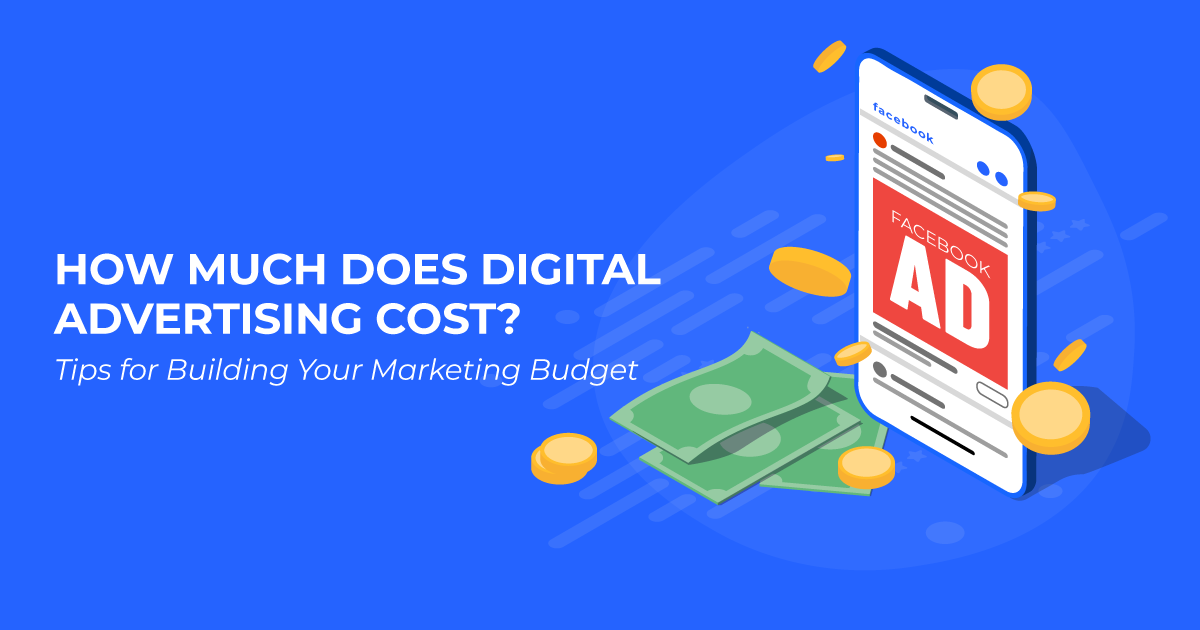
Online Advertising Costs: What Should You Budget?
Online advertising can help businesses reach new customers, generate enquiries and increase sales. But there is no single price for an online campaign. Costs vary according to the platform, audience, competition, campaign objectives and the way the advertising is managed.
Understanding how online advertising is charged can help you set a sensible budget, compare options and judge whether your campaigns are delivering value.
How online advertising is priced
Most digital advertising platforms offer several pricing models. The right one depends on what you want people to do after seeing an advert.
- Cost per click (CPC): You pay when someone clicks on your advert. This is common in search advertising and can suit campaigns focused on website visits or enquiries.
- Cost per thousand impressions (CPM): You pay for every thousand times an advert is shown. CPM is often used to build awareness and reach a particular audience.
- Cost per acquisition (CPA): You measure spend against a completed action, such as a purchase, booking or enquiry. The platform may optimise towards that action, but the actual cost depends on campaign performance.
- Cost per view (CPV): Video platforms may charge when someone watches a video for a set period or interacts with it.
These terms describe ways of buying or measuring advertising. They do not guarantee a particular result. A low cost per click, for example, is not necessarily good value if those clicks do not lead to useful outcomes.
What affects the cost?
Competition
Advertisers often compete to reach the same people. Popular search terms, locations and audience groups can attract higher prices, particularly in competitive industries such as finance, property and legal services.
Your audience and location
The size and specificity of your target audience can affect costs. Reaching people in a small area or targeting a narrow set of interests may reduce the available audience, while broad campaigns can generate more reach but may include people who are less likely to become customers.
Campaign objective and format
A campaign designed to generate purchases may need different creative, targeting and tracking from one intended to introduce a new brand to potential customers. Search adverts, display banners, social media adverts and video campaigns also have different pricing and production requirements.
Ad quality and relevance
Platforms consider factors such as how relevant an advert is to its audience and the experience offered by the landing page. Strong, clear adverts and useful landing pages can support better performance. They cannot remove competition, but they can help make a budget work harder.
Seasonality
Advertising prices and audience behaviour can change throughout the year. Demand may rise around seasonal events, holidays or key shopping periods. It is worth allowing for these variations when planning a campaign.
Budgeting for an online campaign
There is no universal minimum budget that suits every business. A useful starting point is to decide what the campaign needs to achieve, how many potential customers you want to reach and what a valuable outcome is worth to your business.
Set a test budget that is large enough to gather meaningful information, but small enough to manage the risk. Allow time to test different adverts, audiences and landing pages. Once you know which combinations are working, you can make informed decisions about whether to increase, adjust or pause your spend.
It is also important to distinguish between media spend and the other costs involved in running a campaign. Your total budget may include:
- Advertising spend paid to platforms such as Google, Meta or LinkedIn
- Campaign planning and management
- Copywriting, design, photography or video production
- Website or landing-page work
- Analytics, tracking and reporting
If you work with an agency or freelancer, check how their fees are structured. They may charge a fixed fee, an hourly rate, a percentage of advertising spend or a combination. Ask what is included and whether platform spend is billed separately. In the UK, also check whether prices are quoted inclusive or exclusive of VAT.
How to assess whether advertising is worth the cost
Measure campaigns against outcomes that matter to your business, not just clicks or impressions. Depending on your objective, useful measures might include:
- Cost per qualified enquiry
- Cost per sale or booking
- Conversion rate
- Revenue generated compared with advertising spend
- New customers acquired and their longer-term value
Accurate measurement depends on setting up conversion tracking properly. Make sure you know which actions are being counted, how calls or offline sales are recorded, and whether the figures include repeat customers. Results can also take time to assess, especially for businesses with longer sales cycles.
Ways to make your budget go further
- Be specific about your objective: Choose a clear goal before selecting a platform or campaign format.
- Target thoughtfully: Focus on relevant locations, audiences and search terms, then refine based on results.
- Improve the landing page: Make it easy for visitors to understand your offer and take the next step.
- Test one change at a time: Comparing adverts or audiences systematically makes results easier to interpret.
- Review performance regularly: Use reliable data to adjust spend rather than making decisions based on impressions alone.
- Allow for creative costs: Effective advertising relies on good messaging and suitable images or video, not just media spend.
The bottom line
Online advertising costs depend on your market, your goals and the way your campaigns are planned and managed. The most useful budget is not necessarily the largest one; it is a budget tied to clear objectives, measured against meaningful results and adjusted as you learn.
Before launching a campaign, work out what you can afford, clarify all fees and decide how success will be measured. That gives you a stronger basis for comparing channels and investing with confidence.
Eight Advantages of Cost-Effective Online Advertising for Businesses
- Flexible budgets suit businesses of different sizes.
- You can control daily or monthly spend.
- Costs are measurable in real time.
- Campaigns can be adjusted quickly.
- Targeting helps reduce wasted spend.
- You can test adverts before scaling up.
- Clear metrics help assess return on investment.
- Different pricing models suit different goals.
Challenges of Online Advertising: Rising Costs, Uncertain Results, and Additional Fees
- Costs can rise quickly in competitive markets.
- Results are not guaranteed, even with a sizeable budget.
- Creative, management and tracking fees can add to media spend.
Flexible budgets suit businesses of different sizes.
Online advertising offers flexible budgets, making it accessible to businesses of all sizes. You can start with a modest amount, set daily or campaign spending limits, and adjust your budget as results come in. This lets small businesses test what works without committing to a large upfront spend, while larger organisations can scale successful campaigns to reach more people.
You can control daily or monthly spend.
A key advantage of online advertising is the control it gives you over your budget. You can set a daily or monthly spending limit to suit your business, then adjust it as your needs change. This makes it easier to manage costs, test different campaigns and avoid spending more than planned.
Costs are measurable in real time.
One of the key advantages of online advertising costs is that they can be measured in real time. You can monitor spend, clicks, impressions and conversions as a campaign runs, making it easier to see what is working and where your budget is going. If an advert is underperforming, you can adjust the targeting, creative or spend promptly, helping you make informed decisions and get more value from your budget.
Campaigns can be adjusted quickly.
One of the key advantages of online advertising is that campaigns can be adjusted quickly. If an advert is not reaching the right audience or delivering the results you want, you can change its budget, targeting, message or creative without waiting for a new print run or media booking. This flexibility makes it easier to respond to performance and market changes, test different approaches and focus your spend on what works best.
Targeting helps reduce wasted spend.
One of the key advantages of online advertising is the ability to target specific audiences. By focusing your budget on people most likely to be interested in your products or services—based on factors such as location, interests, search behaviour or demographics—you can avoid paying to reach as many irrelevant users. This can reduce wasted spend and help make each advertising pound work harder.
You can test adverts before scaling up.
One of the advantages of online advertising is that you can test adverts on a small budget before committing more money. Try different headlines, images, audiences or offers, then compare the results to see what attracts the right customers. Once you’ve identified what works, you can scale up with greater confidence, while pausing or refining adverts that aren’t delivering value.
Clear metrics help assess return on investment.
Clear metrics make it easier to assess the return on investment from online advertising. By tracking measures such as clicks, enquiries, sales and cost per conversion, businesses can see which campaigns are delivering value and where their budget is being spent effectively. This insight helps them refine their adverts, adjust spending and focus on the channels that contribute most to their goals.
Different pricing models suit different goals.
One of the advantages of online advertising is the choice of pricing models, allowing businesses to match spend to their goals. For example, cost-per-click can suit campaigns focused on website visits, while cost-per-thousand-impressions can help build brand awareness. If the priority is generating leads or sales, measuring cost per acquisition can make it easier to assess how much each result costs. Choosing the right model helps businesses plan campaigns around the outcomes that matter to them.
Costs can rise quickly in competitive markets.
In competitive markets, online advertising costs can rise quickly as businesses bid against one another for the same keywords, audiences and placements. This can push up the price of each click or impression, making it harder to stay within budget—particularly for smaller businesses. Regularly reviewing campaign performance, refining targeting and setting clear spending limits can help keep costs under control.
Results are not guaranteed, even with a sizeable budget.
A sizeable advertising budget does not guarantee results. Campaign performance depends on factors such as audience demand, competition, the quality of your adverts and landing pages, and how well the campaign is managed. You may spend a significant amount without generating the expected number of clicks, enquiries or sales, so it is important to set realistic expectations, monitor performance and adjust your approach as you learn.
Creative, management and tracking fees can add to media spend.
The cost of an online advertising campaign can be higher than the media spend alone. Creating effective adverts may involve copywriting, design, photography or video production, while campaign management and performance tracking can bring further fees. These additional costs should be included in your budget from the outset, so you have a realistic picture of the total investment and can judge whether the campaign is delivering value.